
Sketchbook Notes
Hello, Pigeons!
It's March!!!! I wish I could say that it's almost turning into autumn here, but no... Summer is staying for good. It's been the hottest week so far this summer and we've even had power cuts.
But an extended summer means more nectarines in the basket and sunflowers in the garden. March is also my birthday month! I’m excited about cake too!
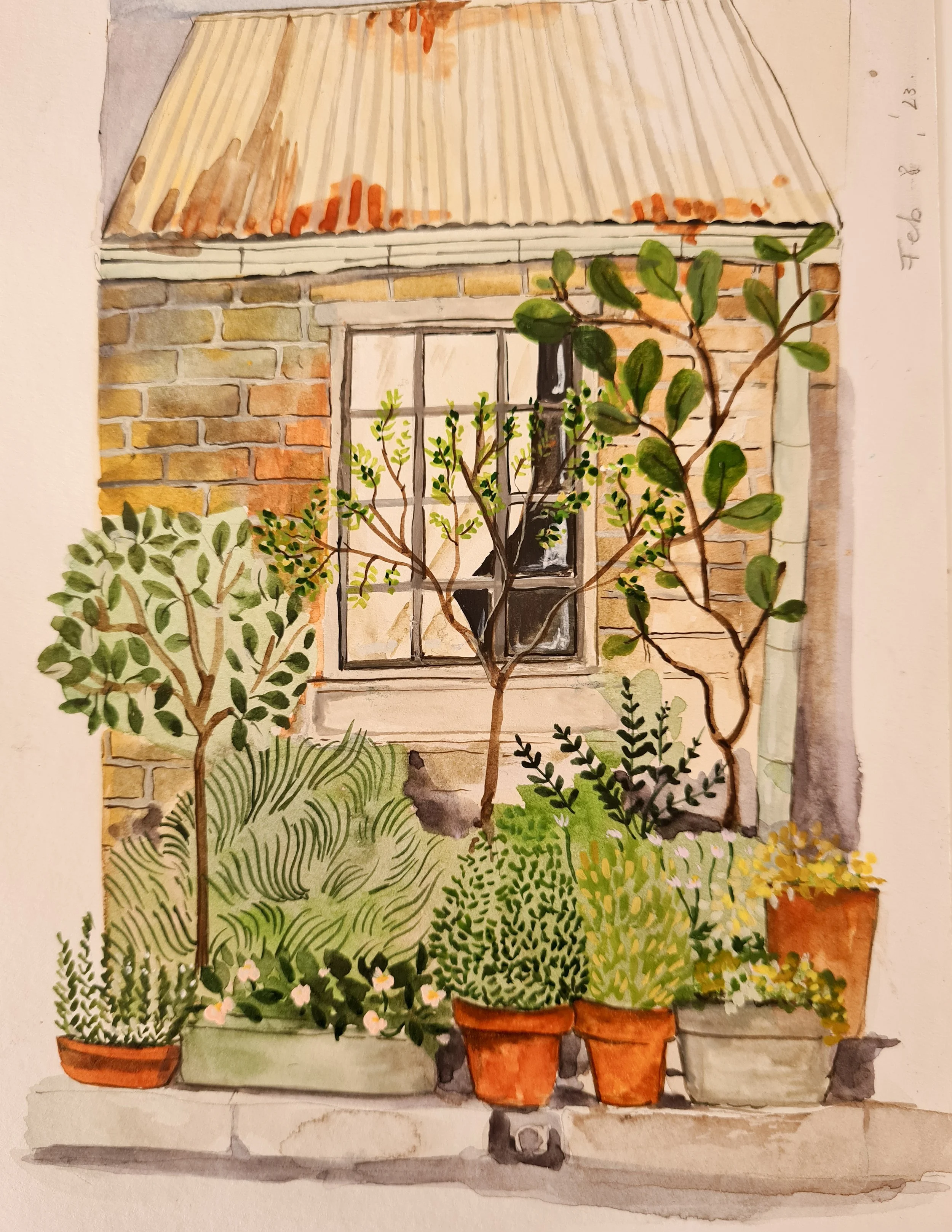
Things are starting to get busy over here so keeping up with the daily sketchbook practice has been hard. I admit I've skipped a few days, but I try to remember the sense of accomplishment it gives me and how nice it is to look back and flip its pages. You can see your personal growth, physically in your hands. Each page is a challenge, and maybe a failure too. I've been trying to dedicate time to sketching from photos ( I usually browse Pinterest for something that I would like to draw, say: badgers... and so I sketch a couple of different poses and faces) and also I've been dedicating time to making paintings, with gouache and watercolors. As you can see in the images below, the subject is capricious and I try to keep it loose and spontaneous.


Let’s talk about Picture Books!
I’ve read a lot of blogs and every artist’s approach to the process is similar and quite different at the same time. I know I’ve changed how I approach a new project, especially after having some books under my belt. Now I feel confident (or at least as confident as an artist can be) in my process.
In this case, “A Gift of Feather”, written by Ken Schept and published by Macmillan. I was approached with this manuscript and the Editor and Art Director had very few pointers or demands. They wanted to give me the freedom to do what I felt the manuscript demanded. It was a story about the loss of a grandma and about grief. So, it is not an easy subject to approach. I felt the book didn’t need to be colorful and detailed. However, I didn’t want it to turn out bleak and dreadful.
My first step is always Characters. I read and re-read the manuscript until I get a feel of what they are like. I ask some questions to the Editor about all the details that are not specified in the text ( in this case the story takes place in a Jewish Family) about ages, city, year the story is set in… etc
In this particular case, the story didn’t demand for a lot of research. I did research for the Jewish Cemetery and candles, of the type of city landscape I wanted (Of course I chose NY!) and the birds I would use to tie the whole story together. But I’ve had other projects that need a lot of research for historical reasons. In that case I would dedicate a lot of time (sometimes weeks) to get a holistic grasp of the era, the clothes, buildings, etc… and then I jump onto characters or as I build my reference library I simultaneously develop the characters.

This is the tidy version of a hundred dirty sketches.
Soon these characters start flowing onto the page of my sketchbook. The older sister seems quieter and thoughtful while the little one was loud and rumbustious. Grandmother went through some iterations as she read a bit dated (I still love her though, maybe because she was inspired by my grandma).

Then I usually feel like I need to paint a scene or something that makes the story come to life. Until I don’t “find” this moment, I am unsure whether to start with the layout for the interior. With this story, I imagined the girls arriving at Grandma Dot’s apartment in the city. The book is very specific in talking about the color grey; the city, Grandma’s hair, the pigeons, and the feathers. So I had this idea of making Grandma’s world monochrome with sepias and charcoal grey and the girls in bright colors. They bring with them joy and color.

As soon as I had this image, I knew I had it. The atmosphere of the book. Subtle but not joyless.
Onto thumbnails. I like to do them small and loose. Preferably on real paper. It gives me a view of the whole board and I can see clearly the rhythm of the book. I like to give breathers between complicated spreads or if I feel a certain part of the text needs a special moment. In this case, too, I had the freedom to do the layout as I pleased.

Once these are approved (and on occasions this part can go super smooth and the editors like what you’ve done… and sometimes there is some back and forth until we reach the perfect layout).

Next, it is time to polish these sketches. Usually, some of the changes that come up in the thumbnail phase, I do them in this stage, so the editors get a more fleshed-out idea of the scenes.
For example: in the spread above, we changed the view of the cemetery and the girls walking to the funeral, for a view from inside the car. So the cemetery was a small detail from the window, more subtle and not so scary.
Below are some other fleshed-out sketches. The scene at the cemetery was very difficult to balance. How can you make a scene in a cemetery not bleak? I still wonder…


This book is one of those rare magic things that come out beautiful and without any hiccups. Just a lovely experience from start to finish.
After all the sketches are approved, I move on to the finals. At this stage, editors might ask you to do two spreads in color to show in meetings and for promotion. So I jump straight onto the spreads that I love the most and that show off the book the best.

As you can see this image suffered little change from the first initial illustration I made as inspiration. I think we all felt this was the “soul”of the book.


Once I was done with the interiors and they were all approved, we moved onto the cover. This is something that varies from project to project. Some editors want to do this first and some approach it at the end. I preffer to do it at the end, because I have a better grasp of the characters and colors, and I think it ends up being more cohesive with the rest of the book.
For this book, I did several iterations with handlettered titles.


Final Cover!!! Yay!
I also did some endpapers filled with feathers and a back cover with grandma’s vase of feather collections. And… the project was done!!!
The overall timeframe for this book was about 6 months from start to finish. After all the work is done, it is a game of patience until the actual physical book is in your hands. Usually a year later.
I’ve enjoyed working on this book so much. Probably because I had the freedom to explore new techniques and be looser with the backgrounds (which I normally would do very detailed!). Thank you to Liz Szabla and Mariam Quraishi, the dream team behind this project who were always so lovely and positive, and encouraging! And to Ken Schept for such a beautiful text, it was a wonderful journey.
These are some of my little discoveries from last month:
Aokky’s Bird Instagram: IG for beautiful pictures of birds. I always go to this IG to sketch birds because it has the best detailed pictures and of specimens I don’t usually see in my area.
Julie Avisar’s IG IG This artist is pure inspiration. I am very anxious to grab my color pencils and try some of her techniques for fun!
On my reading list for this month I have: Emily Dickinson’s Gardening Life and Beatrix Potter’s Gardening Life, both by Martha McDowell. I’ll let you know how I liked them. I can absolutely recommend The Marriage Portrait by Maggie O’Farrell for a historic read and The Namesake by Juhmpa Lahiri (also by this author The Lowlands) for rich, vibrant and heartbreaking stories about migrants, displacement and identity.
Thank you for reading me! Wishing you a lovely March! See you next time!